

Cooking up Amazing Trips contains affiliate links. If you purchase through these links, I may earn a commission at no extra cost to you. See my Disclosure Policy for more information. Thanks for supporting my blog!
Kamakura and Yokohama – Day Trip from Tokyo
Looking to escape Tokyo’s hustle for a day? Just under an hour away, Kamakura and Yokohama offer the perfect mix of history, nature, and modern charm for an unforgettable day trip from Tokyo.
Whether you love ancient temples, ocean views, or buzzing urban streets, this one-day plan covers the key sights—blending Kamakura’s calm with Yokohama’s energy—and still gets you back to Tokyo by bedtime.


💡 This itinerary is part of my 20-day Japan adventure, which you can find in my post, 🌸Japan: 20-Day Itinerary with Cherry Blossoms & Top Cities.
It’s also a great addition if you’re in Tokyo and have some extra time, so be sure to check out my Tokyo 4-Day Itinerary: Best Things to Do & See.


And if you need practical information about Japan, read my article, Japan Tourist Information. It includes details about money, plugs, when to go, how long to stay, transportation options, some interesting facts, and local history.
Here is the list of everything you will find in this article:
A. Kamakura & Yokohama: One-Day Itinerary MAP
Here is the map of my one-day itinerary for visiting Kamakura and Yokohama from Tokyo. Each day is colour-coded and numbered to indicate the order in which the sites are to be visited.
✨ Get the free Japan Travel Planner:
- Organise a multi-city Japan trip with ease
- Perfect for cherry blossom season planning
- Comes with a 9-email itinerary series
B. Kamakura

Kamakura (鎌倉), Japan’s former imperial city, was its political centre between the 12th and 14th centuries. It is renowned for its stunning temples and the Giant Buddha, one of the country’s most iconic landmarks.
To get to Kamakura from Tokyo, I took the JR Shonan-Shinjuku Line (covered by JR Pass) from Shibuya St to Kamakura Station.

Then, I rode the charming Enoden Line to Hase Station (5 min). If you prefer, you can walk this distance in around 20 minutes.

⏩ From Hase St, after a 5-minute walk, I reached Hase-dera Temple.
1. Hase-dera Temple

Founded in 736 CE, Hase-dera Temple (長谷寺) is one of Kamakura’s oldest and most beautiful temples.

It is known for its stunning hillside views, massive wooden Kannon statue, and seasonal flowers. It offers a peaceful retreat that combines history, spirituality, and nature.

There’s a little temple hall in the garden dedicated to Benten, the goddess of beauty and wealth. Close by, there are also some sculptures of Benten and other deities tucked away in a small cave known as Benten-katsu.


The grounds are filled with small Jizō statues dedicated to deceased children and unborn babies.

The ticket cost me ¥400, and the visit took me 40 minutes.
⏩ From there, walk for 10 minutes north, and you’ll arrive at Kōtoku-in Temple.
2. Kōtoku-in Temple

Kōtoku-in Temple (高徳院) is a Buddhist temple that houses the Great Buddha, Kamakura Daibutsu 鎌倉大仏, a massive bronze statue standing 13.35 metres (44 feet) tall and weighing approximately 121 tons.
It’s the second-largest sitting Buddha in Japan, after Nara’s Todai-ji, although that one isn’t outdoors.
Completed in 1252, it has survived earthquakes, typhoons, and even a tsunami. It is hollow, and you can enter for a small fee.


The entrance cost me ¥350, and it can be visited in around 30 minutes.
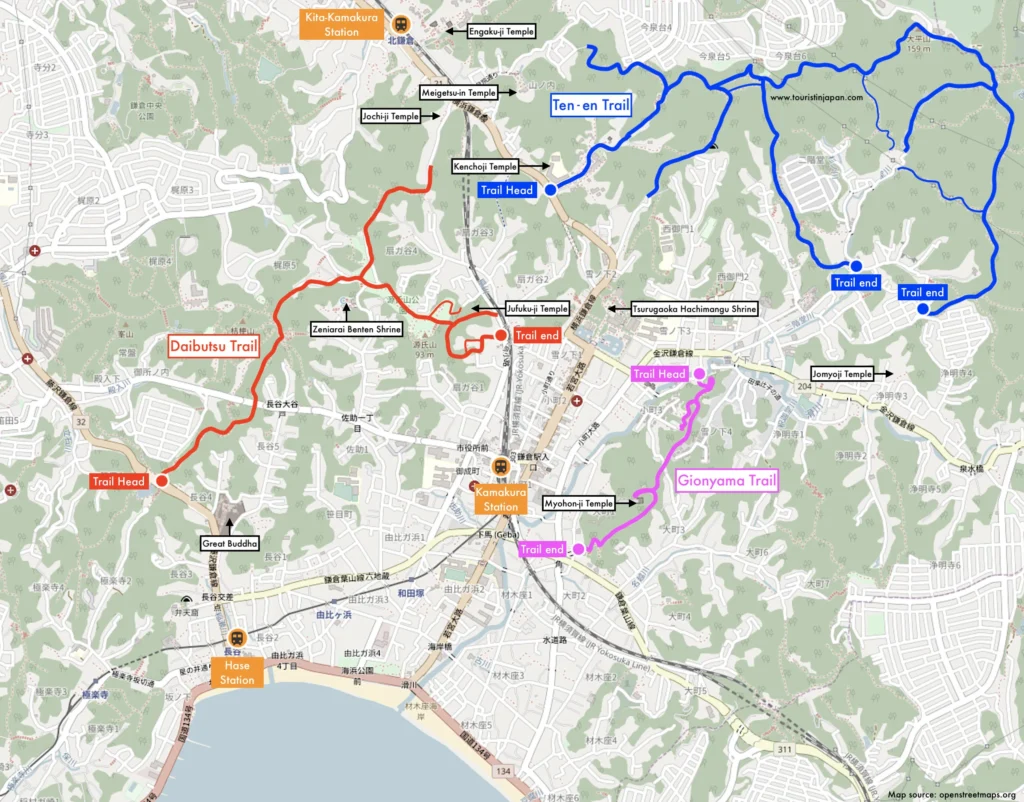
⏩ Following the Daibutsu Hiking Course trail for 30 minutes, the next stop is Zeniarai Benten Shrine.
3. Zeniarai Benten Shrine

The Zeniarai Benten Shrine (銭洗弁財天 宇賀福神社) is dedicated to Benzaiten, the Buddhist goddess of fortune, music, and the arts. It represents the fusion of Buddhism and Shintoism, dating back to the 12th century and deeply rooted in Japanese culture.
The highlight of the shrine is the “washing money” (銭洗い) ritual. People wash their coins and bills in a sacred spring because it’s said that it will double your money or bring you good luck with finances. The spring is tucked away in a cave under the shrine, adding a cool, mystical feel to the whole thing.


You can use the coins provided by the shrine for the money-washing ritual, or you can bring your coins or small bills to wash.
The entrance is free, and you won’t need more than 20 minutes.
⏩ Not far from the shrine (10-minute walk) is the Genjiyama Park.
4. Genjiyama Park

Genjiyama Park (源氏山公園), which opened in 1965, is a historic site featuring stone-paved paths that wind through the forest.
Very popular in spring for the cherry blossoms, the key attraction is the two-meter-tall statue of Minamoto no Yoritomo (源 頼朝). He was a Japanese military leader and the founder of the Kamakura shogunate. His rule (1192-1199) laid the foundation for the Japanese feudal period.
⏩ From the park, it’ll take a 30-minute walk to Komachi Street, where we’ll have lunch.
5. Komachi Street

Komachi Street (小町通り) is the most famous shopping street in Kamakura, leading to the Tsurugaoka Hachimangu Shrine. It is lined with charming shops, cafés, and food stalls that sell local specialities, souvenirs and traditional crafts, creating a vibrant atmosphere.
✳️ Recommendations to eat/drink:


There are so many great places to eat and drink around here, but they were all pretty packed!
In the end, I decided to try Kamakura Ohiru Gohan, and I’m so glad I did! I absolutely recommend it—the food was delicious and super affordable. You should definitely check it out!

✳️ Food to try in Kamakura: Purple Sweet Potato Soft Serve (Murasaki Imo) 紫芋ソフトクリーム. This unique soft-serve ice cream is a speciality of Kamakura.

⏩ Tsurugaoka Hachimangu Shrine is only a 5-minute walk from Komachi.
6. Tsurugaoka Hachimangu Shrine

Founded in 1063 by Minamoto no Yoriyoshi, Tsurugaoka Hachimangu Shrine (鶴岡八幡宮) is Kamakura’s most important Shinto shrine. Relocated in 1180, it’s dedicated to Hachiman, the patron deity of the Minamoto family and samurai warriors.


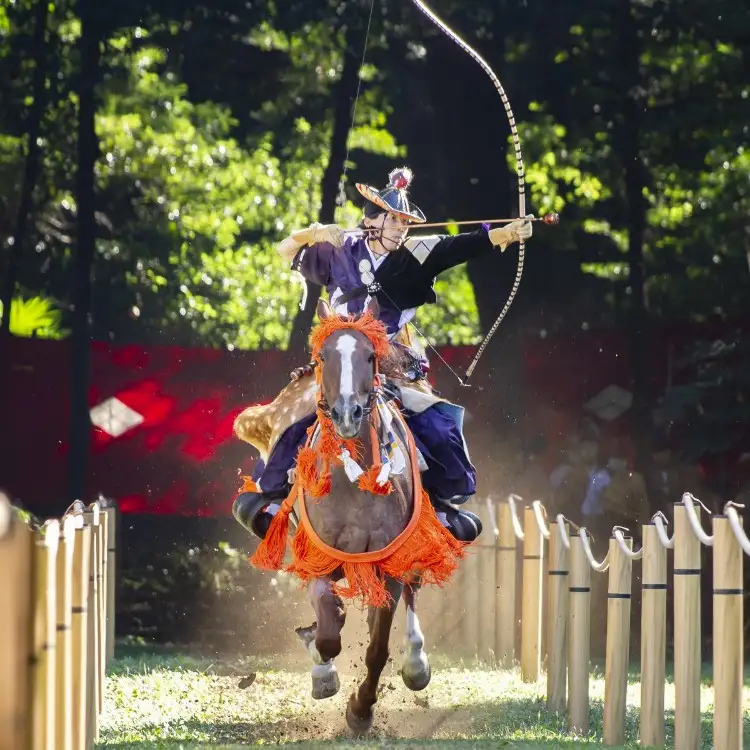
Here, the Yabusame (流鏑馬) is performed. This traditional Japanese horseback archery practice involves shooting arrows at wooden targets while riding at full speed. Initially, it was part of samurai training.
🕕 Opening times: It is open year-round from 06:00 to 20:00.
🎟️ Tickets: The entrance is free, except for the Main Hall (¥200) and the Museum (¥600).
⏩ From Kamakura Station, the Yokosuka Line (covered by the JP Pass) takes you to Yokohama Station in only 30 minutes.
Other Places of Interest
If, instead of going to Yokohama, you prefer to spend more time in this historic, charming city, I’d recommend visiting two other temples:
- Hokokuji Temple (報国寺). It’s a Zen temple renowned for its serene bamboo grove and tranquil tea house. Founded in 1334, it is part of the Rinzai sect and has connections to the Ashikaga clan.
- Engaku-ji Temple (円覚寺). A serene Zen temple near Kita-Kamakura Station is the second most important in Kamakura. It was founded in 1282 by Hojo Tokimune in the city and was reconstructed in 1964. It honours fallen samurai from the Mongol invasions and houses a holy relic, a tooth of Buddha. Known for its serene gardens and traditional wooden architecture, the temple is stunning in the autumn when its maple trees turn vibrant shades of red and gold. It has a large precinct of around 60,000 square metres.
C. Yokohama

Yokohama (横浜市) began as a small fishing village, but after opening its port in 1859, it became a city full of surprises. You can wander through peaceful parks, discover quirky neighbourhoods, and enjoy incredible views of the bay.
I took the underground (Minatomirai Line) from Yokohama Station to Minatomirai Station to get to my first stop: the Yokohama Landmark Tower.
7. Yokohama Landmark Tower

Yokohama Landmark Tower (横浜ランドマークタワー), established in 1993, is located in Yokohama’s Minato Mirai district and stands at 296 metres, making it one of Japan’s tallest skyscrapers. Its flexible structure makes it earthquake-resistant.
It offers stunning panoramic views of the city, bay, and Mount Fuji (on clear days) from its 360-degree Sky Garden observation deck, located on the 69th floor. It boasts one of the world’s fastest elevators.

The tower also features luxury hotels, shopping, dining, and office spaces. It serves as a dynamic hub and is an iconic symbol of Yokohama’s modern skyline.
🕙 It’s open from 10:00 to 21:00.
8. CUPNOODLES Museum

Close to the tower (650m) is the CUPNOODLES Museum, a fun and interactive place that celebrates instant ramen and the man who invented it, Momofuku Ando. You can make your own custom cup, check out a replica of the original ramen shop, and taste different instant noodle styles at the Noodles Bazaar. I skipped this, though.
⏩ Only a 5-minute walk from the museum, or 15 minutes from the tower, are the Red Brick Warehouses.
9. Red Brick Warehouses

The Red Brick Warehouses (横浜赤レンガ倉庫) are a historic site transformed into a shopping, dining, and event space, offering a blend of modern culture within a historic setting.
Constructed in the early 1920s, they served as a customs inspection centre for all goods delivered to the harbour.
⏩ In front of the Red Brick Warehouses is Osanbashi Pier.
10. Osanbashi Pier

Osanbashi Pier, the Yokohama International Passenger Terminal, is renowned for its striking architecture and breathtaking views.
The wooden deck’s wave-like shape makes it the perfect spot to relax and take in the scenery. It’s especially popular at sunset and night, so it’s definitely one of the best places to visit in the city.
⏩ Another 10-minute walk from Osanbashi Pier is Yamashita Park.
11. Yamashita Park

Yamashita Park (山下公園), located on Yokohama’s waterfront, opened in 1930 and was built from debris left by the 1923 Great Kanto Earthquake.
It stretches almost 700 metres and features lush gardens, wide walking paths, and landmarks like the Hikawa Maru, a historic ocean liner, and the “Girl with Red Shoes” statue inspired by a nursery rhyme. It’s an excellent spot for a relaxing stroll and enjoying views of the harbour.

⏩ The next and final stop will be to have dinner in Chinatown, about 400 metres from the park.
12. Yokohama Chinatown

Yokohama Chinatown (横浜中華街), officially called Yokohama Chukagai, is the largest in Japan and one of the largest in the world.
Notable for its ornate temples, such as the Kanteibyo Temple, Chinatown has a vibrant atmosphere and is lined with colourful lanterns. With over 600 shops and restaurants, it offers a diverse range of food options from all regions of China.
Located at the western entrance to Chinatown’s main street, Zenrinmon Gate (Goodwill Gate) is one of the five gates of this neighbourhood.


Thanks to the Japan Rail Pass, I was back in Tokyo in just 23 minutes for a well-deserved rest.
💺Travel smart with a JR Pass or Regional pass—book through my link and start exploring Japan with ease and savings!
The next day, I set off for a new destination: after a brief stop in Odawara to explore its historic castle, I continued on to Hakone to relax in an onsen with breathtaking views of Mount Fuji.
Read here the full post: Odawara, Hakone & Fujiyoshida: Castles, Onsen, Fuji.

👉 Or, go back to Japan’s full itinerary: 🌸Japan: 20-Day Itinerary with Cherry Blossoms & Top Cities.
D. Ready to Book your Trip?
To help you organise your adventure, I’ve gathered the best tools I use and recommend for booking flights, hotels, local transport and more. These links support this site at no extra cost to you.
🧳 Book Your Trip Here
- ✈️ Flights: Compare the best flight prices on Kayak.
- 🛏️ Accommodation: Find hotels and unique stays at great prices worldwide with Booking.com.
- 🚐 Transfers: Pre-book your airport or city transfers to avoid stress on arrival with Welcome Pickups.
- 🚗 Car Rentals: Explore destinations at your own pace by using Discover Cars or Auto Europe to compare reliable car rental providers. You can also compare car rental prices on Kayak.
- 💺Transport: Travel smart with a JR Pass or Regional pass—book through my link and start exploring Japan with ease and savings!
- 📷 Tours & Activities: Book fun experiences, guided tours, and skip-the-line tickets in advance with GetYourGuide or Viator.
- 🌐 Internet Connection: Stay connected abroad with Airalo eSIMs.
- 🔐 For safe and reliable internet access wherever you roam, I always recommend using a VPN—NordVPN is my go-to.
- 🛡️ Don’t forget travel insurance — a small step that saves big headaches! I use Just Travel Cover for comprehensive protection, including coverage for pre-existing conditions. 🌍 Not based in the UK? VisitorsCoverage has you covered—easy, affordable, ready to go!
Safe travels! 🌏✈️
E. More About Japan

Planning a trip to Japan? Here are some of my top posts to help you make the most of your journey – from detailed itineraries and cultural insights to city guides and unique experiences across the country.
⭐ Itineraries & City Guides
🗾🌸 Japan in 20 Days: Cherry Blossom Itinerary & Top Cities. Plan the perfect spring getaway with this 20-day itinerary covering Tokyo, Kyoto, Osaka, cherry blossoms, and essential travel tips.

🗼 Tokyo 4-Day Itinerary: Best Things to Do & See. Explore Tokyo’s must-visit attractions, neighbourhoods, street food, and cultural highlights in just four unforgettable days.

🏯 Odawara, Hakone, Fujiyoshida & Nagoya: Castles, Fuji, and Onsen. Visit historic castles, soak in hot springs, and admire iconic views of Mount Fuji on this scenic multi-stop adventure.

⛩️ The Best of Kyoto in 3 Days. Discover Kyoto’s top temples, gardens, and cultural sites in just three days – includes a downloadable map to guide you.

🍜 Sumo in Osaka, Tastes of Kobe & Highlights from Himeji & Okayama. Catch a sumo match, try Kobe beef, and explore some of Japan’s best castles in this fast-paced guide to western Japan.

📍 Hiroshima & Miyajima: Top Attractions. A must-read for first-timers – explore Hiroshima’s Peace Memorial Park and the stunning Itsukushima Shrine on Miyajima Island.

🏝️ Okinawa: What to See & Do. Planning a beach escape? Discover what to see, do, and know before visiting Okinawa, Japan’s tropical paradise.

⭐ Culture, Religion & Traditions
🧘 Koyasan: My Stay at a Buddhist Temple. Experience the peaceful world of Japanese Buddhism with a temple stay in Koyasan – meditation, monks, and morning prayers.

🙏 Temple Etiquette in Japan: What to Know Before You Visit. Visiting temples and shrines? Learn the dos and don’ts of temple etiquette to show respect during your spiritual visits.

☸️ Japanese Buddhism Made Simple. New to Buddhism? This beginner-friendly guide breaks down key beliefs and traditions in Japanese Buddhist culture.

🍀 Guide to Japanese Lucky Charms & Amulets. Curious about omamori, daruma, or maneki neko? Learn the meanings and traditions behind Japan’s most iconic charms.

⭐ Travel Tips & Cultural Insights
📌 Japan Tourist Information: What You Need to Know. Practical info every traveller should know – transport, money, customs, etiquette, and more to prepare you for your trip.

🚇 Practical Tokyo Guide for First-Time Visitors. Navigate Tokyo like a pro with this beginner-friendly guide to public transport, safety tips, and local etiquette.

📖 Kyoto Travel Guide: What to Know Before You Go. Everything you need for a smooth trip to Kyoto – from the best seasons to visit, how to get around, and local customs.

🌆 Osaka Travel Guide: What to Know Before You Go. When to go, how to get around, what to eat, and more – your go-to guide for Japan’s most vibrant foodie city.

Additional Information

You can also check my itineraries in Itineraries. Here, you’ll find them classified in City Guides and Country Guides.
Alternatively, in the section Destinations, they are classified based on the type of trip:
- Amazing Experiences. It covers the most extensive and complete trips.
- Beach and Sea. For those who prefer quieter activities by the sea.
- City Breaks. Short trips with a single destination.
Remember to check Cook up Your Trip. There, you will find everything you need to organise your trip from start to finish.

I hope you enjoyed this one-day trip from Tokyo to Kamakura and Yokohama.
If you require any clarification, please feel free to leave a comment or complete the contact form. I will be happy to help you. 😊