

Cooking up Amazing Trips contains affiliate links. If you purchase through these links, I may earn a commission at no extra cost to you. See my Disclosure Policy for more information. Thanks for supporting my blog!
Japan Tourist Information
Planning a trip to Japan? This guide brings together essential Japan tourist information to help you navigate the country with confidence.
Whether you’re a first-time visitor or returning explorer ready to explore more of this fascinating destination, having the right information can make all the difference.

This post contains general information about Japan as well as practical details for travellers, including currency, electrical plugs, weather conditions, necessary documents, and transportation options. I also provide some cultural insights, as understanding the local culture will help make your trip truly unforgettable.
👉 If you are looking for an itinerary around Japan, check out my complete itinerary here: 🌸 Japan in 20 Days: Cherry Blossom Itinerary & Top Cities.

This is the list of everything you will find in this article:
✨ Get the free Japan Travel Planner
- Organise a multi-city Japan trip with ease
- Perfect for cherry blossom season planning
- Comes with a 9-email itinerary series
A. Japan – Information of Interest

Location

Japan is an island country located in the Pacific Ocean in East Asia.
It is bordered to the north by the Sea of Okhotsk, to the south by the East China Sea, and to the west by the Sea of Japan. As a result, its only maritime neighbours are China, Russia, South Korea and Taiwan.
Tokyo is the capital of Japan, its largest city, and the most extensive metropolitan area in the world. It is located on the east-central coast of the island of Honshu, within the Kanto region.
Area
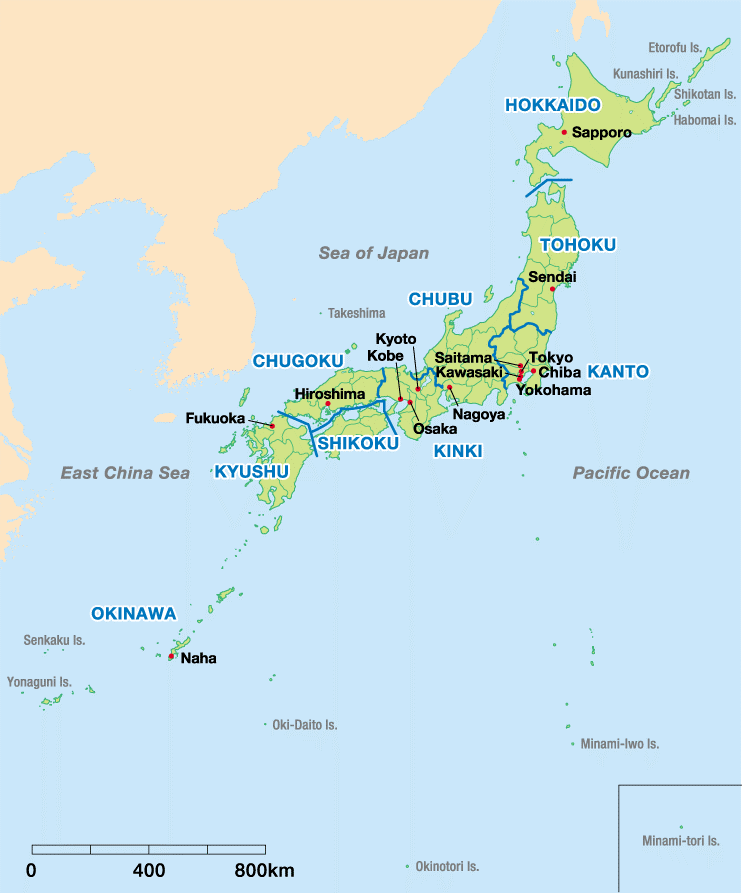
The territory covers nearly 378,000 km² (146,000 sq mi), making it the fourth-largest island country in the world and the largest in East Asia.
It has the sixth-longest coastline at 29,751 km (18,486 mi).
Japan is an archipelago comprising 6,852 islands, ranking it seventh in the world in terms of the most islands. The main islands are Honshu, Hokkaido, Kyushu, and Shikoku.
Approximately 70% of the country’s land area is made up of mountains.
The highest peak in Japan is the iconic Mount Fuji, a 3,776-metre (12,389-foot) active stratovolcano. It is a UNESCO World Heritage Site and a symbol of Japan.
Japan is divided into 47 prefectures (administrative jurisdictions) and eight regions: Hokkaidō, Tōhoku, Kantō, Chūbu, Kansai, Chūgoku, Shikoku, Kyūshū, and Ryūkyū Islands.
Population

As of March 2025, Japan’s population was 123.4 million, accounting for approximately 1.5% of the total global population.
Demonym
Japanese.
Language

Japanese is the national language. It’s divided into two major dialects: Hondo and Nantō.
Japan uses three distinct writing systems: kanji (characters derived from Chinese), hiragana (a phonetic script for native Japanese words), and katakana (a phonetic script used for foreign words and names).
Texts can be written in two ways: Western style, with horizontal rows from top to bottom, or traditional Japanese style, with vertical columns from right to left. Both styles coexist today.
Remember that you can check the language spoken in each country using the tables that I attach to my posts: Countries by Language and Best Time to Go.
B. Japan – Practical Information
Money

The official currency of Japan is the yen, which is the third most traded currency in the foreign exchange market, after the US dollar and the euro.
Its abbreviation is JPY, and its symbol is ¥ (international) or 円 (in Japan).
a. Important Information
- The way money works in Japan is different from that in other advanced countries.
- Many establishments, such as taxis, buses, family shops, and restaurants, do not accept card payments.
- Foreign cards are not always compatible with Japanese ATMs, as Japanese banks often don’t have agreements with foreign banks, and the fees are high.
b. Recommendations
✳️ Bring a good amount of cash.
✳️ Use a debit card at ATMs, as it’s often cheaper. Some of the ATMs you can use to withdraw money are located in Post Offices, Airports, Prestia Banks, 7-Eleven stores, and Aeon Mall ATMs.
✳️ Use IC Cards (SUICA, PASMO or ICOCA). They are basically prepaid cards that can be purchased at the main train stations.
- *Advantages:
- 🔼 They can be used throughout the country to pay for buses, local trains (excluding the Shinkansen, or bullet train), ferries, subways, vending machines, convenience stores, and coin lockers.
- 🔼 Some IC cards are now also available as mobile apps for smartphones.
- *Disadvantages:
- 🔽 They can only be topped up with cash.
- 🔽 Most IC cards require a security deposit of 500 yen (approximately £2.70, €3, or $3.50). But it’s typically refunded when the card is returned.
I used an ICOCA card during my entire trip, and it was highly convenient. It saved me a lot of time when using public transportation since I didn’t have to purchase a ticket for each ride. You tap the card when entering and exiting, and it automatically charges you the correct amount.

In my post, Currency exchange, cards, and cash abroad (Complete Guide), there is a table that allows you to see the currency used by entering the name of the country you’re interested in. Additionally, this article provides all the essential information you need to know about money and travelling.
Communications

For tips on using your phone abroad without breaking the bank, check out my article Save at the Destination. It includes a specific section on using the Internet Abroad.
- 🌐 Internet Connection: Stay connected abroad with Airalo eSIMs.
- 🔐 For safe and reliable internet access wherever you roam, I always recommend using a VPN—NordVPN is my go-to.
Plugs and Voltage

The plug used in Japan is Type A, also known as the “American” type. It features two flat parallel pins with a small hole each and lacks a ground connection.
You may also find the Type B plug, a variation of the Type A plug, in some places. It has three triangle-shaped pins: two are flat, and the other leg (ground) is round and slightly longer than the others.


The voltage is 100 volts, and the frequency is 50 / 60 Hz.
Please refer to my post Plug Types by Country to learn about the different types of plugs used in each country and their corresponding voltages. This will help you determine if you need an adapter and, if so, what kind.
This information is available in the Travel Logistics section, along with other essentials you need for a smooth trip.
Best time to visit Japan and for How long
*️⃣ Best Time to Visit Japan

The ideal time to visit Japan is:
- Between March and May, the weather is warm and dry. However, keep in mind that it’s high season due to the cherry blossoms (sakura), so it will be jam-packed.
- Between September and November, the weather is pleasant, making it a great time to enjoy the vibrant autumn foliage, also known as Koyo, with its bright red leaves.
For those who prefer a more peaceful experience, consider avoiding the busier months. Just remember, you’ll miss out on some absolutely stunning photos! Also, don’t expect to be alone — you’re likely to have company, regardless of when you visit.
If you want to pick a different travel destination based on the most suitable time to visit, see my posts Best Time to Go and Where to Travel Each Month. It will help you plan your trip better.
*️⃣ How Long to Visit

The duration of your trip will depend on your interests and the destinations you wish to explore. I recommend a minimum of 15 days, but if you can, aim for three weeks. That way, you’ll have more time to enjoy various activities and truly immerse yourself in the culture.
In my posts, How Many Days I Need to Visit Each Country and How Many Days I Need to Visit Each City, I explain the number of days needed to visit each country and the most touristy cities.
✈️ Flights: Compare the best prices on flights using Kayak.
Documentation

To enter Japan, travellers must complete immigration and customs procedures. As of January 2024, these have been combined into a single QR code for efficiency.
Each traveller, including minors, must fill out their own immigration form, while the customs form is only once per family unit.
The easiest way to do this is to use Visit Japan Web.
For more information on the required documents to visit Japan, please refer to my post Travel Documents.
C. How to Get Around Japan

🅰️ Between Cities
The best way to get around Japan is by train because the network is excellent and extensive.
Japanese trains are some of the most punctual in the world. Based on my experience with buses and the underground, they are also very efficient.
As I mentioned earlier in the ‘Recommendations‘ section regarding money, using an IC Card to get around on public transportation (buses, subways and local trains) is a fantastic idea! Trust me; it’ll make your journey so much easier and more enjoyable.
Bullet Train (Shinkansen) and Japan Rail Pass

If you are looking for information about Japan’s transportation system, you may have already heard of the famous Japan Rail Pass.

For those who haven’t, the JR Pass is a rail pass that allows foreign tourists unlimited travel (with certain conditions) on long-distance trains, including bullet trains, as well as some buses and ferries throughout the country.
You may come across numerous comments urging you to buy it because “it’s the best option.” While that’s great to hear, it’s always a good idea to take a moment and see if it really fits your needs and YOUR trip.
Pros and Cons
✅ Pros:
- Unlimited travel on long-distance trains.
- Potential cost savings in some cases.
- Convenience.
❌ Cons:
- It isn’t cheap, particularly following the significant price increase in autumn 2023.
- It doesn’t cover ALL trains.
- There are only three duration options available: 7, 14, and 21 days.
- The pass is valid for consecutive days only.
- Please note that it is exclusively for tourists, which may not apply to you.
You can choose the ‘Green Card’ option, which is the first-class option. However, I don’t believe it’s worth the price since economy class in Japan is excellent!
My Recommendations
✳️ Compare the cost of all the trains you’ll need that are included in the JR Pass with the price of the pass.
Many websites can help you determine whether a JR Pass is worth it for your trip, such as the JR Fare Calculator. You can also check the price for each specific journey using Google Maps. Once you have the prices for all your trips, add them up and compare the total to the cost of the JR Pass. This will help you decide if the pass is a good option for you.
✳️ In general, public transport is cheap, especially compared to the UK! So, please focus on the bullet trains you’ll be using, as they are the most expensive.
✳️ Remember that there are regional passes that cover different areas, which may suit your trip and pocket better.
💺Travel smart with a JR Pass or Regional pass—book through my link and start exploring Japan with ease and savings!

✳️ If you get it through the official JR Train website (any of my links), you will have the advantage of booking the tickets and reserving the seats you want in advance before arriving in the country. But remember to collect the tickets before boarding.
My Experience: When planning my trip, I debated whether to purchase a rail pass for my 20-day journey. I was going to spend a few days in cities like Tokyo, Kyoto, and Osaka, so I realised I wouldn’t be using the pass every single day. This meant I would be paying for days when I wasn’t utilising the pass. Ultimately, I purchased the Kansai-Hiroshima Area Pass for five days, which helped me save a significant amount of money.

Other Options
▶️ There are other means of transportation you can use to move around the country, such as flights and buses, which also work very well. However, they tend to cost more and take longer than taking a train.
▶️ However, when you want to get to some remote places or when the public transport timetable is not the most convenient, renting a car can be the best option.
I did it for a couple of days, and it was an excellent experience. Driving in Japan is very easy, and unlike in most countries, even the drivers are super polite.
If you’re considering renting a car, read my post, Car Rentals (Complete Guide), where I provide all the necessary information and tips to avoid any surprises when renting a vehicle.
🚗 Car Rentals: Explore Japan at your own pace by using Discover Cars or Auto Europe to compare reliable car rental providers. You can also compare car rental prices on Kayak.
🅱️ Within the Cities
To get around the city, it’s best to use public transportation. The specific type of transportation may vary by city:
- In Tokyo, the JR East train lines and the underground are the best ways to get around.
- In Kyoto and Osaka, where the underground system is not as extensive, buses are the go-to option for getting from one spot to another.
Other Options
- Taxis. They are expensive, but they can be convenient when there are few other options, as they save you a lot of time. Their licence plates have a green background and frame. If that isn’t the case, it could be a fake taxi.

- Uber. It is now becoming widespread and working as well as in Europe.
D. Japan – Cultural Information
Flag

The national flag of Japan, commonly known as the Hinomaru, was officially adopted on May 3, 1870. At that time, it was only used to represent ships and Japan’s diplomatic services abroad.
The flag was formally designated as the national flag on August 13, 1999.
The flag consists of a rectangular white banner with a red circle in the centre, symbolising Japan as the “Land of the Rising Sun”.
The earliest evidence of a sun flag dates back to 1184, with oral traditions suggesting its use may have been much earlier.
History of Japan

Tradition holds that the sun goddess Amaterasu founded Japan in the 7th century BC and is an ancestor of its first emperor, Jimmu. Today, the emperor is known as the “Son of the Sun.”
Japan is often called the “Land of the Rising Sun” because it is one of the first countries to experience sunrise each day.
The following timeline offers a comprehensive overview of Japan’s rich and complex history, spanning from its ancient origins to its contemporary influence on the global stage.
1. Ancient & Classical Japan (Prehistory – 1185)
- Ancient Beginnings: Japan’s earliest known inhabitants arrived around 30,000 BCE during the Jomon period. This was followed by the Yayoi period (300 BCE – 300 CE), during which rice farming was introduced from the Korean Peninsula.
- Formation of the Imperial Family: The Yamato period (c. 300 – 710 CE) saw the rise of Japan’s first unified state with the establishment of the Imperial family, which claims to be the oldest continuous hereditary monarchy in the world.
- Buddhism and Chinese Influence: From the 6th century, Japan began to adopt Buddhism, Chinese writing, and other cultural influences from the Tang dynasty in China, particularly during the Asuka and Nara periods (538-794 CE).
- Heian Period (794-1185): In 794, the capital was moved to Heian-kyō (modern-day Kyoto), marking the beginning of the Heian period, a time of flourishing art, literature (e.g., The Tale of Genji), and court culture.
2. Feudal Japan (1185 – 1603)
- Feudal Era: In the late 12th century, the Kamakura shogunate (1185-1333) marked the rise of the samurai and the establishment of military rule, leading to the creation of a feudal system that dominated Japan for centuries.
- Mongol Invasions: In the late 13th century, Japan successfully repelled two invasions by Mongol forces (in 1274 and 1281), aided by the kamikaze, or “divine winds,” which were actually typhoons.
- Warring States Period (1467-1603): The Sengoku period was marked by intense civil war and political fragmentation, with various warlords (daimyōs) fighting for control until the rise of powerful unifiers, such as Oda Nobunaga, Toyotomi Hideyoshi, and Tokugawa Ieyasu.
3. Early Modern Japan (1603 – 1868)
- Tokugawa Shogunate (1603-1868): In 1603, Tokugawa Ieyasu established the Tokugawa Shogunate, marking the beginning of the Edo period, a period of peace and isolation during which Japan was largely closed off from the rest of the world.
4. Modern Japan (1868 – Present)
- Meiji Restoration (1868): In 1868, the Meiji Restoration ended over 250 years of isolation, restoring imperial rule under Emperor Meiji and marking the beginning of Japan’s rapid modernisation and industrialisation.
- Imperial Expansion and WWII: Japan became a militaristic empire in the early 20th century, expanding its territory through wars with China, Russia, and Korea. It later entered World War II (1939-1945), leading to Japan’s defeat in 1945 after the atomic bombings of Hiroshima and Nagasaki.
- Post-war recovery: After WWII, Japan was occupied by the United States and underwent significant political, economic, and social reforms. It transformed into a peaceful and democratic nation and emerged as an economic powerhouse by the 1960s.
- Economic Growth and Technological Innovation: In the latter half of the 20th century, Japan became renowned for its rapid economic growth, technological advancements (such as in robotics, automobiles, and electronics), and cultural influence, particularly through anime, manga, and global pop culture.
- 21st-century Japan remains a global leader in technology, culture, and economics, with a reputation for innovation, efficiency, and unique cultural traditions. However, in recent years, it has faced challenges such as an ageing population and economic stagnation.
Interesting Facts about Japan

- Japan is home to the world-famous Shinkansen, also known as the bullet train. It was inaugurated in October 1964, linking Tokyo and Osaka at a speed of 200 km/h. Today, it can travel at speeds of up to 320 km/h (200 mph). These trains are renowned for their punctuality, safety, and efficiency.

- Japan is home to the world’s oldest known company, Kongō Gumi, which was founded in 578. It operated in the construction sector for over 1,400 years before being absorbed into another company, Takamatsu Construction, in 2006.
- The World’s Largest Fish Market: The Tsukiji Fish Market in Tokyo was once the largest in the world. Since 2018, Toyosu has been the preferred location for the seafood trade and tourism.

- Technological Innovation: Japan is also famous for its technological advancements. The country is a leader in robotics and consumer electronics, and has introduced innovations such as robot waiters in restaurants and high-tech toilets with various features.

- The Japanese tea ceremony, known as chanoyu, is a centuries-old tradition that involves the ritualistic preparation and consumption of matcha, a powdered green tea. It is an art form that emphasises harmony, respect, purity, and tranquillity.

- Japan and Russia have never signed a peace treaty to end their World War II conflict. The primary reason is a territorial dispute over a group of islands known as the Southern Kurils, also referred to as the Northern Territories.

- Superstitions and Beliefs: Japan has several unique superstitions, such as the belief that the number 4 is unlucky because it sounds like the word for “death” (死, shi). Additionally, they think that whistling at night attracts snakes and spirits.

- Eating while walking is frowned upon on the streets and local trains. Some cities, like Katamura, have a policy against it.
- 40% of publications in Japan are manga.

- It’s good manners to slurp your noodles.

Other Things to Know
- You must carry your passport with you at all times in Japan. It is a legal requirement, and police may arrest you if you cannot provide proof of your visa or residence status.
- Japan has a strict drug policy with minimal tolerance for low-level drug possession. The penalties include life imprisonment.
- Smoking is illegal on the streets of some cities.
- Please be aware that Japan experiences extreme weather, including typhoons, earthquakes, and tsunamis.
- Respect the etiquette when visiting shrines or temples in Japan. If you are unsure, check my post on Temple Etiquette in Japan: What to Know Before You Visit.
E. Ready to Book your Trip?
To help you organise your adventure, I’ve gathered the best tools I use and recommend for booking flights, hotels, local transport and more. These links support this site at no extra cost to you.
🧳 Book Your Trip Here
- ✈️ Flights: Compare the best prices on flights using Kayak.
- 🛏️ Accommodation: Find hotels and unique stays at great prices worldwide with Booking.com.
- 🚐 Transfers: Pre-book your airport or city transfers to avoid stress on arrival with Welcome Pickups.
- 🚗 Car Rentals: Explore destinations at your own pace by using Discover Cars or Auto Europe to compare reliable car rental providers. You can also compare car rental prices on Kayak.
- 💺Transport: Travel smart with a JR Pass or Regional pass—book through my link and start exploring Japan with ease and savings!
- 📷 Tours & Activities: Book fun experiences, guided tours, and skip-the-line tickets in advance with GetYourGuide or Viator.
- 🌐 Internet Connection: Stay connected abroad with Airalo eSIMs.
- 🔐 For safe and reliable internet access wherever you roam, I always recommend using a VPN—NordVPN is my go-to.
- 🛡️ Don’t forget travel insurance — a small step that saves big headaches! I use Just Travel Cover for comprehensive protection, including coverage for pre-existing conditions. 🌍 Not based in the UK? VisitorsCoverage has you covered—easy, affordable, ready to go!
Safe travels! 🌏✈️
F. More About Japan

Planning a trip to Japan? Here are some of my top posts to help you make the most of your journey – from detailed itineraries and cultural insights to city guides and unique experiences across the country.
⭐ Itineraries & City Guides
🗾🌸 Japan in 20 Days: Cherry Blossom Itinerary & Top Cities. Plan the perfect spring getaway with this 20-day itinerary covering Tokyo, Kyoto, Osaka, cherry blossoms, and essential travel tips.

🗼 Tokyo 4-Day Itinerary: Best Things to Do & See. Explore Tokyo’s must-visit attractions, neighbourhoods, street food, and cultural highlights in just four unforgettable days.

🚉 Kamakura & Yokohama: Day Trip from Tokyo. A perfect day trip from Tokyo to explore Kamakura’s temples and Yokohama’s scenic bayside – history, food, and coastal charm.

🏯 Odawara, Hakone, Fujiyoshida & Nagoya: Castles, Fuji, and Onsen. Visit historic castles, soak in hot springs, and admire iconic views of Mount Fuji on this scenic multi-stop adventure.

⛩️ The Best of Kyoto in 3 Days. Discover Kyoto’s top temples, gardens, and cultural sites in just three days – includes a downloadable map to guide you.

🍜 Sumo in Osaka, Tastes of Kobe & Highlights from Himeji & Okayama. Catch a sumo match, try Kobe beef, and explore some of Japan’s best castles in this fast-paced guide to western Japan.

📍 Hiroshima & Miyajima: Top Attractions. A must-read for first-timers – explore Hiroshima’s Peace Memorial Park and the stunning Itsukushima Shrine on Miyajima Island.

🏝️ Okinawa: What to See & Do. Planning a beach escape? Discover what to see, do, and know before visiting Okinawa, Japan’s tropical paradise.

⭐ Culture, Religion & Traditions
🧘 Koyasan: My Stay at a Buddhist Temple. Experience the peaceful world of Japanese Buddhism with a temple stay in Koyasan – meditation, monks, and morning prayers.

🙏 Temple Etiquette in Japan: What to Know Before You Visit. Visiting temples and shrines? Learn the dos and don’ts of temple etiquette to show respect during your spiritual visits.

☸️ Japanese Buddhism Made Simple. New to Buddhism? This beginner-friendly guide breaks down key beliefs and traditions in Japanese Buddhist culture.

🍀 Guide to Japanese Lucky Charms & Amulets. Curious about omamori, daruma, or maneki neko? Learn the meanings and traditions behind Japan’s most iconic charms.

⭐ Travel Tips & Cultural Insights
🚇 Practical Tokyo Guide for First-Time Visitors. Navigate Tokyo like a pro with this beginner-friendly guide to public transport, safety tips, and local etiquette.

📖 Kyoto Travel Guide: What to Know Before You Go. Everything you need for a smooth trip to Kyoto – from the best seasons to visit, how to get around, and local customs.

🌆 Osaka Travel Guide: What to Know Before You Go. When to go, how to get around, what to eat, and more – your go-to guide for Japan’s most vibrant foodie city.

Additional Information

You can also check my itineraries in Itineraries. Here you’ll find them classified in City Guides and Country Guides.
Alternatively, in the section Destinations, they are classified based on the type of trip:
- Amazing Experiences. It covers the most extensive and complete trips.
- Beach and Sea. For those who prefer quieter activities by the sea.
- City Breaks. Short trips with a single destination.
Remember to check Cook up Your Trip. There, you will find everything you need to organise your trip from start to finish.

If you require any clarification, please feel free to leave a comment or complete the contact form. I will be happy to help you. 😊