

Cooking up Amazing Trips contains affiliate links. If you purchase through these links, I may earn a commission at no extra cost to you. See my Disclosure Policy for more information. Thanks for supporting my blog!
Practical Tokyo Guide for First-Time Visitors
Tokyo is one of the most exciting cities in the world—but for first-time visitors, it can also be overwhelming. With its vast train system, unique customs, and endless neighbourhoods to explore, a little preparation goes a long way. That’s where this practical Tokyo guide for first-time visitors comes in—to help you feel more confident and make the most of your trip.

In this post, you’ll discover essential travel tips to make your first trip to Tokyo smoother, less stressful, and more enjoyable. This guide covers everything from navigating public transportation and deciding the best times to visit to managing your money, as well as providing cultural insights and interesting facts. With this information at hand, you can focus on fully enjoying your experience in Tokyo.
👉 If you are looking for top things to do in Tokyo, check out my complete itinerary here: Tokyo 4-Day Itinerary: Best Things to Do & See.

And don’t forget to check out the complete 20-day Japan itinerary: 🌸Japan in 20 Days: Cherry Blossom Itinerary & Top Cities.
This is the list of everything you will find in this article:
✨ Get the free Japan Travel Planner
- Organise a multi-city Japan trip with ease
- Perfect for cherry blossom season planning
- Comes with a 9-email itinerary series
A. Tokyo – Information of Interest

Location

Tokyo is situated at the centre of the Japanese archipelago, on the largest island, Honshu, and to the south of the Kanto region.
It is the capital and largest city of Japan, as well as the world’s most extensive metropolitan area.
Area
The city itself covers an area of 2,194 km² (847 sq mi), while Greater Tokyo spans approximately 13,500 km² (5,200 sq mi).
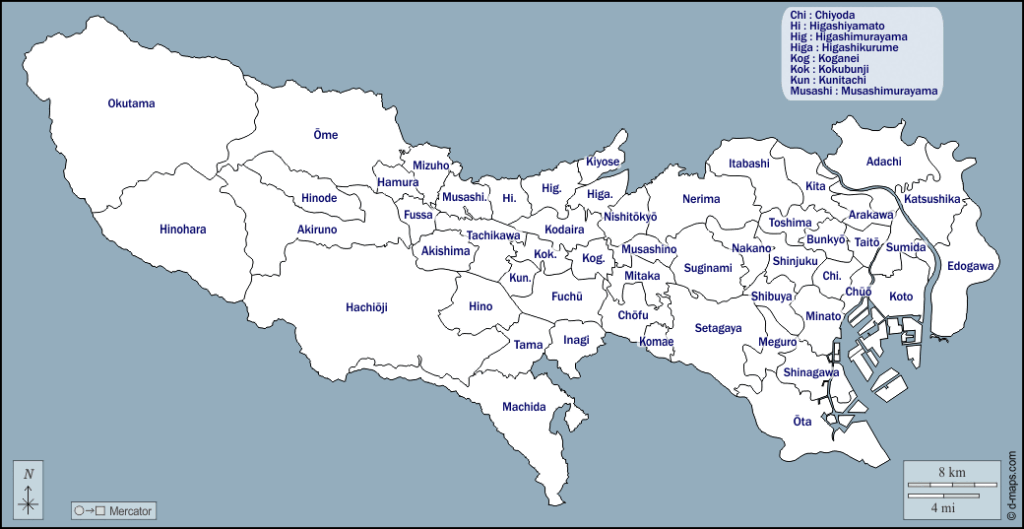
Population

- Tokyo is the most populous city in Japan, with a population of approximately 9.75 million as of 2024.
- The Greater Tokyo Area, a broader metropolitan area that includes surrounding prefectures such as Kanagawa, Saitama, and Chiba, has a population of approximately 37 million people, making it the most populous urban area in the world.
Demonym
Tokyoite.
Language

In Tokyo, the primary language is Japanese, particularly the Tokyo dialect, which is considered the Standard Dialect of Japanese.
This standard form, known as hyōjungo or kyōtsūgo, is based on the language spoken in Tokyo’s higher-class areas.
Remember that you can check the language spoken in each country using the tables that I attach to my posts: Countries by Language and Best Time to Go.
B. Tokyo – Practical Information
Money

The official currency of Tokyo (and the rest of Japan) is the yen, which is the third most traded currency in the foreign exchange market, after the US dollar and the euro.
Its abbreviation is JPY, and its symbol is ¥ (international) or 円 (in Japan).
a. Important Information
- The way money works in Japan is different from that in other advanced countries.
- Many establishments, such as taxis, buses, family shops, and restaurants, do not accept card payments.
- Foreign cards are not always compatible with Japanese ATMs, as Japanese banks often don’t have agreements with foreign banks, and the fees are high.
b. Recommendations
✳️ Bring a good amount of cash.
✳️ Use a debit card at ATMs because it’s cheaper. Some of the ATMs you can use to withdraw money are in Post Offices, Airports, Prestia Banks, 7-Eleven stores and Aeon Mall ATMs.
✳️ Use IC Cards (SUICA, PASMO or ICOCA). They are basically prepaid cards that can be purchased at the main train stations.
*Advantages:
- They can be used throughout the country to pay for buses, local trains (excluding the Shinkansen, or bullet train), ferries, subways, vending machines, convenience stores, and coin lockers.
- Some IC cards are now also available as mobile apps for smartphones.
*Disadvantages:
- They can only be topped up with cash.
- Most IC cards require a security deposit of 500 yen (approximately £2.70, €3, or $3.50). But it’s typically refunded when the card is returned.
I used an ICOCA card during my entire trip, and it was highly convenient. It saved me a lot of time when using public transportation since I didn’t have to purchase a ticket for each ride. You tap the card when entering and exiting, and it automatically charges you the correct amount.

In my post, Currency Exchange, Cards, and Cash Abroad (Complete Guide), there is a table that allows you to view the currency used by entering the name of the country you’re interested in. Additionally, this article provides all the essential information you need to know about money and travelling.
Communications

For tips on using your phone abroad without breaking the bank, check out my article Save at the Destination. It includes a specific section on using the Internet Abroad.
- 🌐 Internet Connection: Stay connected abroad with Airalo eSIMs.
- 🔐 For safe and reliable internet access wherever you roam, I always recommend using a VPN—NordVPN is my go-to.
Plugs and Voltage

The plug used in Tokyo (and the rest of Japan) is Type A, also known as the “American” type. It features two flat parallel pins with a small hole each and lacks a ground connection.
In some places, you may also find the Type B plug, which is a variation of the Type A plug. It has three triangle-shaped pins: two are flat, and the other leg (ground) is round and slightly longer than the others.


The voltage is 100 volts, and the frequency is 50 / 60 Hz.
Please refer to my post Plug Types by Country to learn about the different types of plugs used in each country and their corresponding voltages. This will help you determine if you need an adapter and, if so, what type.
This information is available in the Travel Logistics section, along with other essentials you need for a smooth trip.
Best time to visit Tokyo and for How long
*️⃣ Best Time to Visit Tokyo

The ideal time to visit Tokyo is:
- Between March and May, the weather is warm and dry. But keep in mind that it’s high season due to the cherry blossoms (sakura), so it’s going to be very busy.
- Between September and November, the weather is pleasant, making it a great time to enjoy the vibrant autumn foliage, also known as koyo, with its bright red leaves.
For those who prefer a more peaceful experience, consider avoiding the busier months. Just remember, you’ll miss out on some absolutely stunning photos! Also, don’t expect to be alone — this fantastic city is the largest in the world, so you’re likely to have company, no matter when you visit!
If you want to pick a different travel destination based on the most suitable time to visit, see my posts Best Time to Go and Where to Travel Each Month. It will help you plan your trip better.
*️⃣ How Long to Visit

The length of your trip really depends on your pace! I recommend a minimum of 3 days, but if possible, aim for five. That way, you’ll have plenty of time to enjoy the city over four days. On the fifth day, you can check out other fantastic places near Tokyo!
In my posts, How Many Days I Need to Visit Each Country and How Many Days I Need to Visit Each City, I explain the number of days needed to visit each country and the most touristy cities.
✈️ Flights: Compare the best prices on flights using Kayak.
C. How to Get Around Tokyo

The train lines run by JR East and the underground are the easiest way to get around central Tokyo.
They are very efficient; however, the challenge is that they are operated by multiple companies, all using the same tracks, which can make navigation difficult.
But don’t worry! As I mentioned earlier in the ‘Recommendations‘ section regarding money, using an IC Card to travel on public transport — including buses, undergrounds, and local trains — will make your journey much easier and more enjoyable.
There are also Metro tickets for unlimited use of all underground lines, available for 24, 48, and 72 hours.
Other Options
Other transportation options are:
- Buses. They serve as a secondary means of transportation, complementing the underground and train networks.
- Taxis. They are expensive, but they can be convenient when there aren’t many other options, as they save you a lot of time. Their licence plates have a green background and frame. If that isn’t the case, it could be a fake taxi.
- Uber. It is now becoming widespread and working as well as in Europe.
D. Tokyo – Cultural Information
Flag

The flag of Tokyo Metropolis was officially adopted on October 1st, 1964.
It features a white Metropolitan Crest (a stylised representation of the sun) centred in a dark purple background, also known as Edo purple.
History

This timeline provides a brief overview of how Tokyo evolved from a small fishing village into one of the world’s most influential cities.
- Ancient Beginnings: Originally, a small fishing village named Edo was founded in the 12th century during the Kamakura period.
- Rise as a Samurai Hub: Edo became the seat of the Tokugawa shogunate in 1603, marking the beginning of the Edo period (1603-1868), a time of relative peace and isolation under the rule of the Tokugawa family.
- Development and Growth: During the Edo period, the city experienced rapid growth, becoming one of the largest urban centres in the world by the 18th century, with a population exceeding 1 million people.
- End of the Shogunate: In 1868, following the Meiji Restoration, the Tokugawa shogunate fell, and the emperor was restored to power. Edo was renamed Tokyo, meaning “Eastern Capital,” as the new capital of Japan.
- Modernisation and Westernisation: During the Meiji era (1868-1912), Tokyo underwent a transformation into a modern metropolis with the introduction of Western technology, infrastructure, and culture.
- The Great Kanto Earthquake: In 1923, the Great Kanto Earthquake struck, causing widespread devastation and resulting in over 100,000 deaths. The city was rebuilt and continued to grow.
- World War II: During World War II, Tokyo was heavily bombed, especially in 1945, leading to significant destruction and loss of life. The city underwent extensive reconstruction after the war.
- Post-War Economic Boom: In the 1950s and 1960s, Tokyo experienced rapid economic growth, transforming into a global financial powerhouse. It hosted the 1964 Summer Olympics, the first Olympics held in Asia.
- Technological and Cultural Innovation: Tokyo became a hub of technology, fashion, and pop culture, particularly with the rise of anime, manga, and video games in the late 20th century.
- Present Day: Today, Tokyo is the world’s most populous metropolitan area, renowned for its high-tech infrastructure, vibrant cultural scene, and historical landmarks, which blend modernity with tradition.
Interesting Facts about Tokyo

- Largest Metropolitan Area: Tokyo is the most populous metropolitan area in the world, with a population of over 37 million people in the greater Tokyo area.
- Shinjuku Station in Tokyo holds the record for the world’s busiest railway station, with over 3.5 million passengers passing through daily.
- A vast number of Restaurants: Tokyo is home to the most Michelin-starred restaurants in the world, boasting over 200 stars, more than any other city.
- Historic and Modern Fusion: Tokyo beautifully blends modern skyscrapers with traditional shrines, such as the famous Senso-ji Temple in Asakusa, offering a unique contrast between old and new.
- A City of Islands: Tokyo is actually located on the eastern coast of the island of Honshu, Japan’s largest island. However, the Greater Tokyo Area includes multiple islands, including the Izu Islands and the Ogasawara Islands.
- Tallest Tower: Tokyo Skytree is the tallest structure in Japan and the second tallest in the world, standing at 634 metres (2,080 feet). It is also a broadcasting and observation tower.
- Punctuality: Public transport in Tokyo, especially its trains, is renowned for being exceptionally punctual, with delays being measured in seconds rather than minutes.
- Cherry Blossom Viewing: Tokyo is one of the best places to experience “hanami”, or cherry blossom viewing, in the spring. The parks, such as Ueno Park, are filled with people enjoying the fleeting beauty of the blossoms.
- Vending Machines Everywhere: Tokyo is renowned for its extensive network of vending machines, offering a diverse range of items, from drinks and snacks to hot meals, umbrellas, and even fresh eggs.
- A Haven for Anime: Tokyo is the Mecca of Anime and Manga Culture. The district of Akihabara is known as the “Electric Town” and serves as a hub for all things related to anime, video games, and electronics.
E. Ready to Book your Trip?
To help you organise your adventure, I’ve gathered the best tools I use and recommend for booking flights, hotels, local transport and more. These links support this site at no extra cost to you.
🧳 Book Your Trip Here
- ✈️ Flights: Compare the best prices on flights using Kayak.
- 🛏️ Accommodation: Find hotels and unique stays at great prices worldwide with Booking.com.
- 🚐 Transfers: Pre-book your airport or city transfers to avoid stress on arrival with Welcome Pickups.
- 🚗 Car Rentals: Explore destinations at your own pace by using Discover Cars or Auto Europe to compare reliable car rental providers.
- 💺Transport: Travel smart with a JR Pass or Regional pass—book through my link and start exploring Japan with ease and savings!
- 📷 Tours & Activities: Book fun experiences, guided tours, and skip-the-line tickets in advance with GetYourGuide or Viator.
- 🌐 Internet Connection: Stay connected abroad with Airalo eSIMs.
- 🔐 For safe and reliable internet access wherever you roam, I always recommend using a VPN—NordVPN is my go-to.
- 🛡️ Don’t forget travel insurance — a small step that saves big headaches! I use Just Travel Cover for comprehensive protection, including coverage for pre-existing conditions. 🌍 Not based in the UK? VisitorsCoverage has you covered—easy, affordable, ready to go!
Safe travels! 🌏✈️
F. More About Japan

Planning a trip to Japan? Here are some of my top posts to help you make the most of your journey – from detailed itineraries and cultural insights to city guides and unique experiences across the country.
⭐ Itineraries & City Guides
🗾🌸 Japan in 20 Days: Cherry Blossom Itinerary & Top Cities. Plan the perfect spring getaway with this 20-day itinerary covering Tokyo, Kyoto, Osaka, cherry blossoms, and essential travel tips.

🗼 Tokyo 4-Day Itinerary: Best Things to Do & See. Explore Tokyo’s must-visit attractions, neighbourhoods, street food, and cultural highlights in just four unforgettable days.

🚉 Kamakura & Yokohama: Day Trip from Tokyo. A perfect day trip from Tokyo to explore Kamakura’s temples and Yokohama’s scenic bayside – history, food, and coastal charm.

🏯 Odawara, Hakone, Fujiyoshida & Nagoya: Castles, Fuji, and Onsen. Visit historic castles, soak in hot springs, and admire iconic views of Mount Fuji on this scenic multi-stop adventure.

⛩️ The Best of Kyoto in 3 Days. Discover Kyoto’s top temples, gardens, and cultural sites in just three days – includes a downloadable map to guide you.

🍜 Sumo in Osaka, Tastes of Kobe & Highlights from Himeji & Okayama. Catch a sumo match, try Kobe beef, and explore some of Japan’s best castles in this fast-paced guide to western Japan.

📍 Hiroshima & Miyajima: Top Attractions. A must-read for first-timers – explore Hiroshima’s Peace Memorial Park and the stunning Itsukushima Shrine on Miyajima Island.

🏝️ Okinawa: What to See & Do. Planning a beach escape? Discover what to see, do, and know before visiting Okinawa, Japan’s tropical paradise.

⭐ Culture, Religion & Traditions
🧘 Koyasan: My Stay at a Buddhist Temple. Experience the peaceful world of Japanese Buddhism with a temple stay in Koyasan – meditation, monks, and morning prayers.

🙏 Temple Etiquette in Japan: What to Know Before You Visit. Visiting temples and shrines? Learn the dos and don’ts of temple etiquette to show respect during your spiritual visits.

☸️ Japanese Buddhism Made Simple. New to Buddhism? This beginner-friendly guide breaks down key beliefs and traditions in Japanese Buddhist culture.

🍀 Guide to Japanese Lucky Charms & Amulets. Curious about omamori, daruma, or maneki neko? Learn the meanings and traditions behind Japan’s most iconic charms.

⭐ Travel Tips & Cultural Insights
📌 Japan Tourist Information: What You Need to Know. Practical info every traveller should know – transport, money, customs, etiquette, and more to prepare you for your trip.

📖 Kyoto Travel Guide: What to Know Before You Go. Everything you need for a smooth trip to Kyoto – from the best seasons to visit, how to get around, and local customs.

🌆 Osaka Travel Guide: What to Know Before You Go. When to go, how to get around, what to eat, and more – your go-to guide for Japan’s most vibrant foodie city.

Additional Information

You can also check my itineraries in Itineraries. Here, you’ll find them classified in City Guides and Country Guides.
Alternatively, in the section Destinations, they are classified based on the type of trip:
- Amazing Experiences. It covers the most extensive and complete trips.
- Beach and Sea. For those who prefer quieter activities by the sea.
- City Breaks. Short trips with a single destination.
Remember to check Cook up Your Trip. There, you will find everything you need to organise your trip from start to finish.

I hope you liked this practical Tokyo guide for first-time visitors. If you require any clarification, please feel free to leave a comment or complete the contact form. I will be happy to help you. 😊