

Cooking up Amazing Trips contains affiliate links. If you purchase through these links, I may earn a commission at no extra cost to you. See my Disclosure Policy for more information. Thanks for supporting my blog!
Sal, Cape Verde: Travel Guide & 10-Day Itinerary
I went to Sal, Cape Verde, for a beach holiday 🏖️— I got that — plenty of it, and I’m not complaining — but I also got sharks, a volcano you can float in, and turtles nesting under a full sky of stars. Turns out the fly-and-flop island has a few tricks up its sleeve. 🏖️🦈🌋🐢
🦈⚽ Cape Verde’s World Cup Moment 🏆
Before the 2026 World Cup, hardly anyone could find Cape Verde on a map 🌍— reportedly, that included some of the tournament’s own organisers 😂. Then the “Blue Sharks” showed up at their first-ever World Cup, the second-smallest nation in history to qualify.
And they refused to be a footnote: They held Spain to a shock 0-0, drew with Uruguay and Saudi Arabia, and took reigning champions (at that moment) Argentina to extra time in the Round of 32. They lost 3-2, but Sidny Lopes Cabral’s stunning equaliser was voted best goal of the entire tournament.🥇
But the real star was Vozinha, their 40-year-old goalkeeper. Seven saves shut out Spain and turned him into an overnight sensation — his Instagram jumped from 56,000 followers to over 14 million in a matter of weeks. 😲

I felt it the moment I landed: Blue Sharks T-shirts everywhere — on taxi drivers, on waiters, stacked in every souvenir shop in Santa Maria. This one wasn’t the official kit, but a fan tee stamped with the island’s other favourite phrase: No Stress (Cape Verde’s unofficial motto, worn with pride). 🤩
⬆️ Not the official kit, but this “No Stress” tee was everywhere.
Everyone I spoke to hoped the football would bring tourists, jobs and better infrastructure. Not a bad legacy for one extra-time defeat 👏.
As always, I’ll start with some general information about the place and then detail the main points of interest in a day-by-day itinerary with a map!
This is the list of everything you will find in this article:
🗺️ Planning this trip?
Use my Free Travel Planner to organise your itinerary, budget, and days step by step without missing anything.
Is Sal, Cape Verde, Worth Visiting?


Yes. The beaches live up to the hype — turquoise water, soft sand, sunshine close to guaranteed year-round. But that’s not even the best part.
Sal has a reputation as a fly-and-flop destination, and most people never look past that. Which is a shame, because a short drive inland or up the coast turns “beach holiday” into wading with juvenile lemon sharks, floating in an extinct volcanic crater like it’s the Dead Sea, watching loggerhead turtles nest under the stars, or standing in the desert as a Fata Morgana mirage shimmers on the horizon.
You really don’t need a package deal or a travel agent to have a genuinely memorable time here. English is widely spoken in tourist areas, taxis are cheap and honest, and with a single well-organised day tour you can cover the island’s highlights without any stress.
Is Sal Cheap?
Honestly? No, it isn’t cheap.
Prices in Santa Maria carry European tags across the board — restaurants, drinks, basics — which catches people off guard in what’s still, by most measures, a developing nation. The usual explanation is that Cape Verde imports almost everything: there’s little arable land and limited local production, so goods travel a long way before they land on a shelf here.
Example: I paid €12 (£10.50) for a box of tampons — a Portuguese brand that costs €2.19 back in Portugal. Nearly six times the price for the exact same product, in a country that still speaks Portugal’s language and imports much of what it sells from there.
Obviously, not all prices are that extreme — but it’s a good example of something I genuinely needed to buy.
⚠️ Pack anything you rely on regularly before you go!

It’s not just consumer goods, either — even getting in the door carries a premium. The mandatory entry fee works out to around €31 per person (in 2026), more than the UK’s £20 ETA or the EU’s upcoming €20 ETIAS. For a country with Cape Verde’s income level, that’s a steep price of admission.
None of this makes Sal not worth visiting — it clearly is — but budget for it more like a trip to Portugal or the Canaries than a typical West African destination.
Is it worth it? Completely.
A. Sal, Cape Verde: Essential Facts

Location


Cape Verde (officially Cabo Verde) is an archipelago of 10 volcanic islands in the Atlantic Ocean, located approximately 570 km off the west coast of Africa (Senegal). These are the names of all the islands:
- The Barlavento Islands: Santo Antão, São Vicente, Santa Luzia, São Nicolau, Sal, Boa Vista.
- The Sotavento Islands: Maio, Santiago, Fogo, Brava.

Sal is one of the eastern islands of the archipelago — the flattest, driest, and most tourist-oriented of them all.
Despite being geographically part of Africa, Cape Verde has a distinctly hybrid culture — shaped equally by its Portuguese colonial heritage, West African roots, and the Caribbean-style ease of island life. It’s one of those rare places that genuinely feels like nowhere else.

The capital of Sal is Espargos, in the centre of the island. But for travellers, the real hub is Santa Maria, a beach town at the southern tip with the best beach, the most restaurants, and the most hotels, which is where I stayed.
Area

Sal is a charming little island, measuring just 216 km². It’s only about 30 km long from north to south and 12 km at its widest point, which means you can easily drive from one end to the other in around 30 minutes!
The island has a unique, flat landscape that’s more reminiscent of the Sahara than a tropical paradise, even though stunning turquoise waters surround it. The highest spot on Sal, Monte Grande, is just 406 metres high, so it’s perfect for leisurely hikes without too much strain.
Don’t let the size fool you, though — there’s enough to fill 10 very pleasant days if you mix sightseeing with beach time, which is exactly what this itinerary does.
Population

Cape Verde has about 530,000 people living there as of 2026.
According to the official census, around 33,347 of them are in Sal, with a good number working in the tourism scene.
Most of the permanent residents live in the capital, Espargos, while Santa Maria has a smaller but growing community. Plus, many Cape Verdeans live outside the country, with more in Europe and the U.S. than at home.
Demonym
Cape Verdean (or Cabo Verdean). Locals from Sal specifically are sometimes called Salense.
Language

The official language is Portuguese, a legacy of centuries of Portuguese colonial rule. But what you’ll actually hear people speaking to each other is Cape Verdean Creole (Kriolu). This fascinatingly distinct language blends Portuguese with West African languages, and sounds quite unlike either.
In tourist areas like Santa Maria, English is widely spoken in hotels, restaurants and shops. You won’t have any difficulty communicating as an independent traveller. A few words of Portuguese are always appreciated by locals, though — even a simple obrigado (thank you) goes a long way.
Remember that you can check the language spoken in each country using the tables I attach to my articles, Countries by Language and Best Time to Go.
Interesting Facts about Sal & Cape Verde

- Sal means “salt” in Portuguese — the island was named after the salt flats that were its main industry for centuries. Salt from Sal was once exported as far as Brazil and the Belgian Congo.
- Cape Verde has sunshine almost 350 days a year — making it one of the sunniest places on Earth and a hugely popular winter sun destination for Europeans.
- The Pedra de Lume salt crater is inside an extinct volcano. Seawater seeps in despite the crater sitting above sea level — creating a hypersaline lake where you float effortlessly, just like the Dead Sea.
- Loggerhead turtles nest on Sal’s beaches between July and October. The island is one of the most important nesting sites in the world for this endangered species.
- Sal is one of the world’s top kitesurfing destinations. The consistent northeast trade winds make it a mecca for kite and windsurfers, and it regularly hosts world championship events.
- “No Stress” is Cape Verde’s unofficial motto — and it really does sum up the vibe. Life moves slowly here; people are warm and unhurried, and the atmosphere is genuinely one of the most relaxed I’ve encountered anywhere.
- Cape Verde gained independence from Portugal in 1975. It’s considered one of Africa’s most stable and developed democracies (35 years old), with a high Human Development Index relative to the region.
B. Planning Your Trip to Sal: Practical Tips
Currency

The official currency is the Cape Verdean Escudo (CVE). Still, it’s a restricted currency, which means it must be purchased upon arrival, as I explain in my post Currency exchange, cards and cash abroad (Complete Guide). There, you’ll also find all the essential information about managing money while travelling.

In Santa Maria and tourist areas, euros are widely accepted, allowing you to navigate without escudos. In my experience, vendors seemed to prefer euros over escudos, and prices were mostly displayed in euros (€).
ATMs are available in Santa Maria and Espargos, but they only give escudos. Make sure to grab some cash before you set off to explore the more remote areas. Most hotels and restaurants in Santa Maria are happy to accept card payments, but not all of them do, so it’s a good idea to keep some cash on hand just in case.
Plugs and Voltage

Cape Verde uses Type C and Type F plugs — the standard European two-pin plugs. The voltage is 220 volts at 50 Hz. UK travellers will need a Type C/F adapter. Travellers from continental Europe need no adapter at all.


You can check my article Plug Types by Country for more details in the Travel Logistics section.
Best Time to Visit Sal and How Many Days
Best time to visit Sal

*️⃣ Sal enjoys sunshine almost year-round, with temperatures ranging from around 22°C in January to 28°C in September. Rainfall is virtually nonexistent, making it a genuinely all-season destination.
The best time to visit is from October to June, when the seas are warm, dry, and relatively calm. July to September brings slightly stronger winds (great for kitesurfers, less ideal for swimming) and occasional Saharan dust. However, July–October is also turtle nesting season, a unique and unforgettable experience.
I visited at the beginning of July — warm, sunny, perfect for the beach, and right at the start of turtle season.
If you want to pick a different travel destination based on the most suitable time to visit, see my posts Best Time to Go and Where to Travel Each Month.
How Many Days in Sal

*️⃣ Sal is a small island — the sightseeing highlights fit into a single full-day tour, so after that it’s really just about how many beach days you want. A week is comfortable for a relaxing holiday; honestly, 10 days can feel like a stretch for a single island, especially if you are active.

Flights between islands take 15–45 minutes (see the flight map). It adds planning and cost, but breaks up the trip properly. If you’d rather keep things simple with one base, a week in Sal is the sweet spot; go for 10 only if you’re happy doing very little for a very long time.
If I were planning this again with 10 days, I’d split it: 5–6 days in Sal, then fly to Santiago or Boa Vista for the rest of the trip. As I mentioned earlier, that was my original plan — but the flight, ferry times, and prices didn’t work out for me.
In my posts How Many Days I Need to Visit Each Country and How Many Days I Need to Visit Each City, I explain the number of days needed to visit each destination.
✈️ Flights: Compare the best prices on flights using Kayak — my go-to. For unconventional routes and hidden deals, also check Kiwi.com.
Entry Requirements to Cape Verde
From 1 January 2019, the visa requirement for stays of up to 30 days in Cape Verde was abolished for most nationalities. If you’re unsure whether your country still requires a visa, check the official list.
However, all travellers must complete a pre-registration form and pay the Airport Security Fee (TSA) before arrival. Here’s what you need to do:
- Register on the government website ease.gov.cv at least 5 days before your arrival
- The form must be submitted individually (one per person, including children)
- The fee as of June 2026 was 3,400 ECV (approx. €30.83)
⚠️💸 Important: From 1 July 2026, travellers who have not completed the pre-registration or cannot show proof of payment at border control will be charged double the TSA fee on arrival. Don’t leave this until the last minute.
For other documents you might need for your trip, check my post Travel Documents.
C. Getting Around Sal

Getting around Sal is refreshingly simple. If you’re based in Santa Maria — which I’d strongly recommend — most of what you need is within easy walking distance: the beach, restaurants, shops, and the town square. For everything else, taxis are cheap, plentiful and honest.
Why I Based Myself in Santa Maria — and Why You Should Too
My original plan was to island-hop across Cape Verde, but inter-island transport is either expensive (flights) or time-consuming (ferries) — so I decided to focus on Sal alone.
My next plan was to hire a car, drive around Sal, and stay in different spots across the island to get a more authentic, immersive experience. After a lot of research, I changed my mind about that too — and I’m glad I did.
Here’s the truth about Sal: most of the island is flat, arid and not particularly scenic in the traditional sense. The interior is desert, the northern and western coasts are exposed to strong Atlantic winds and waves — ideal for kitesurfers and windsurfers, but not for swimming or relaxing on the beach. Santa Maria is where you find the only truly calm, swimmable beach on the island — a long, sheltered, stunning stretch of turquoise water that most travellers come to Sal specifically for.

It’s also where you’ll find the widest choice of restaurants, bars and entertainment — and it’s the most practical base for day trips and tours that cover the island’s highlights. Moving around Sal to “see more” simply isn’t worth the effort: everything important can be reached on a single day tour from Santa Maria, and you’d be sacrificing the beach — the whole point of coming — for very little gain.
Stay in Santa Maria. Explore from there. Trust me on this one. 😊
Taxis

Taxis are the easiest and most practical way to get around Sal. They’re affordable (roughly €1 per km), and drivers will always agree on the price before the journey. A taxi from Santa Maria to Espargos costs around €10–12. Always agree on the fare before you get in.
Aluguers (Shared Minibuses)
The local shared minibuses (aluguers) are the cheapest way to get around, but they run on their own timetable — they leave when full, not on a schedule. Fine for getting between Santa Maria and Espargos, but not reliable for specific timing.
Rental Car

A rental car gives you maximum freedom to explore the island at your own pace. Though it’s worth knowing that many of the most touristic spots aren’t reached by paved roads, and signage is minimal, so navigating independently isn’t always straightforward. Still worth it if you want to spend time at multiple beaches or explore the north on your own schedule. That said, if you’re doing a day tour (which I’d recommend), a car isn’t really necessary.
⭐ Tip: If you’re staying in Santa Maria for the whole trip and doing a guided island tour for sightseeing, you genuinely don’t need a rental car. Save the money and use taxis instead.
If you are considering renting a car, I recommend reading my post Car Rentals (Complete Guide), which provides all the information and tips to avoid any surprises.
🚗 Car Rentals: Compare reliable car rental providers with Discover Cars or Auto Europe.
D. Sal & Cape Verde History & Culture
Flag

The flag of Cape Verde features three horizontal bands of blue, white and red, with a circle of ten yellow stars positioned slightly left of centre.
The blue represents the ocean and sky, the white and red represent the road to progress, and the 10 yellow stars represent the country’s 10 main islands.
Origin and Brief History of Cape Verde


- The islands were uninhabited when Portuguese explorers arrived in 1456, making them among the few places in the world with no indigenous population at the time of European contact.
- Portugal colonised the islands, and Cape Verde became a major hub in the transatlantic slave trade — a dark chapter that deeply shaped the islands’ demographic and cultural identity.
- The population that developed was largely Creole — a mix of Portuguese settlers and enslaved West Africans — giving Cape Verde its unique hybrid culture, cuisine, language and music.
- Sal specifically was valued for its salt flats, which were mined and exported from the early 1800s until production ceased in 1984. The island’s name is a direct legacy of this industry.
- Cape Verde gained independence from Portugal in 1975, peacefully and without conflict. It has since become one of Africa’s most stable democracies and has achieved remarkable development despite having no natural resources beyond sun and wind.
- Tourism arrived on Sal in the 1960s when the island’s airport was used as a refuelling stop for long-haul flights. The first hotel, Hotel Morabeza, opened in 1967 and still operates today.
Music & Culture

Cape Verde has a musical culture completely out of proportion to its size. The most famous genre is morna—a melancholic, soulful style of music often compared to Portuguese fado and blues. Its most celebrated practitioner was Cesária Évora, the “Barefoot Diva” from the island of São Vicente, who became one of the world’s best-known African musicians. You’ll hear morna playing in restaurants and bars across Sal, especially in the evenings.
The Cape Verdean concept of saudade — a deep, bittersweet longing for something or someone absent — runs through the culture and music, a legacy perhaps of centuries of emigration and separation.
Food and Drink
Cape Verdean cuisine is hearty, flavourful and deeply influenced by both Portuguese and West African cooking. Some things you absolutely must try:
- Cachupa — the national dish. A rich, slow-cooked stew of corn, beans, and meat. Every family has their own recipe. Try it at a local café rather than a tourist restaurant for the real thing.

- Fresh grilled tuna — Sal is surrounded by fishing grounds, and the tuna here is exceptional. Order it simply grilled with onions, and you won’t be disappointed.

- Grogue — Cape Verde’s own sugarcane rum, produced on the island of Santo Antão. Strong and distinctive. Worth trying at least once.

- Fresh lobster — surprisingly affordable compared to Europe, and a real treat. Ask which restaurants have it fresh that day.

E. 10-Day Sal Itinerary (Day by Day) + Map
Below is the map for a 10-day visit to Sal. I was based at Robinson Cape Verde in Santa Maria throughout — an excellent choice, right on one of the island’s best beaches.

I know all-inclusive can be a turn-off, but a couple of things are worth considering here. First, there isn’t much else on the island to pull you away from the hotel for meals. Second, this isn’t a well-developed country — unless you have an iron stomach, it’s worth being careful about what you eat and drink outside the hotel, and staying on-site sidesteps that risk.
My honest take: the cocktails aren’t the best, but the food is genuinely excellent — different dishes, individually plated, for both lunch and dinner. I was there 10 days and never had the same meal twice, which isn’t what I expected from an all-inclusive. The entertainment followed the same pattern — something different most evenings rather than the same show on a loop.
Being adults-only was a big plus too — no kids running around the pool or beach, which made for a properly relaxing stay. The hotel also has its own stretch of beach, screened off with windbreaks for extra privacy.
🛏️ Accommodation: Find hotels and unique stays at great prices in Sal with Booking.com. Also worth comparing on Hotels.com — prices can vary for the same property.
1. Sal — Day 1: Arrival & Santa Maria

There’s only one airport on the island — Amílcar Cabral International — about 16 km north of Santa Maria, a straightforward 20-minute taxi ride from the tarmac to your hotel.
🚐 Transfers: Pre-book your airport or city transfers to avoid stress on arrival with Welcome Pickups. Or you can also arrange it with Viator.
Settle in, get your bearings, and resist the urge to do too much on Day 1. That said, depending on when you land, Santa Maria itself is worth a gentle first wander.
a. Santa Maria Town

What was once a sleepy fishing and salt-trading village has transformed into Cape Verde’s main tourist hub — but it retains a genuinely charming, small-town atmosphere. The town is compact and almost entirely flat, centred around Praça Marcelo Leitão (the main square near the beachfront) and the pedestrianised Rua 1º de Junho, a strip of cafés, restaurants and souvenir shops that hums gently into the evening.

Take an evening stroll, find a beachfront restaurant, and let the “No Stress” vibe wash over you. You’ve arrived ☺️
b. Santa Maria Beach & Pontão (Pier)


The Pontão de Santa Maria is the most recognisable landmark in town… or was. A long wooden pier jutting into turquoise water, permanently busy with fishermen, sunbathers and photo-hunters. Here’s the plot twist nobody warns you about — it isn’t there. I stood on the beach scanning the horizon for a pier that wasn’t there, mildly embarrassed, before flagging someone down just to check I hadn’t wandered onto the wrong stretch of sand.
Turns out I hadn’t. A brutal storm tore through Sal in October 2024, largely destroying the pier, and the rebuild isn’t expected to be finished until sometime in 2027. Where the pier used to stand, you’ll now find a big fenced-off construction zone — not just for the pier, but because the Spanish hotel chain Barceló is also building a new five-star resort on the same stretch of beach.
So if you go looking for the iconic photo and can’t find it, you’re not losing your mind — the postcard shot will have to wait a couple more years.
You can track its construction progress on their official website.
The beach itself is unaffected, though — 8 km of it, officially one of Cape Verde’s Seven Natural Wonders.
2–3. Sal — Days 2 & 3: Beach Days

Sal is, above all, a beach destination — and Santa Maria Beach is the reason most people come. Soft golden sand, warm water that ranges roughly 22–27°C depending on the season, and that signature turquoise colour that genuinely looks photoshopped but isn’t.
With 10 days on the island, you have the luxury of not rushing anything. These early beach days are for settling in, finding your favourite spot, and working out which beach bar does the best cocktail.
I stayed at Robinson Cape Verde, on a private stretch of Santa Maria beach, and it was the perfect way to ease into relaxing mode 😎. Each pair of sunloungers came with an umbrella and a windbreaker — genuinely useful on windy days and handy for a bit of privacy, too. It was also right next to the beach bar and the sports centre, so everything I needed was a short walk away.


⭐ Tips for Santa Maria Beach:
- Safety first: don’t leave valuables unattended on the beach — hotel-reserved areas have security, public stretches don’t.
- Jellyfish can appear between August and October — ask locals before swimming if you’re visiting in that window.
- The western end of the beach (towards Ponta Preta) is quieter and less developed — worth the walk if you want to escape the beach bar strip.

- If it’s your thing, this is the time to try any aquatic sports on offer: scuba diving, kitesurfing, snorkelling, jet skiing, banana boat, windsurfing. Or even a horse ride along the beach.

- The morning fish market in Santa Maria (05:00–08:00) is worth an early visit — fishermen sell their catch straight from the boats, and local restaurants come to buy the day’s supply. It used to take place at the wooden pier (Pontão), but while that’s under reconstruction, it’s moved to the adjacent beach.

4. Sal — Day 4: Full Island Day Tour

This is the day that shows you a completely different side of Sal — and it’s extraordinary. Away from the beach, the island reveals volcanic craters, desert mirages, lemon sharks and authentic Cape Verdean life that everybody should see.
If you’ve read any of my other posts, you’ll know organised tours aren’t really my thing — I like being in charge of my own time. The usual problem: too long in places I don’t care about, not enough in places I’d happily linger, and no say over where I eat. But Sal breaks my rule. Most of the roads here are unpaved, the places on this list are properly off-road, and signage is basically non-existent. Unless you’ve got a local with you, you’ll struggle to find them — let alone fit them all into one day (it sounds ambitious, but it’s genuinely doable without rushing). So this is one of those rare occasions where I’ll say it myself: book the tour.
I booked the Sal Island: Full-Day Highlights Tour with a Local Guide — pickup included, and a genuinely excellent guide. It covered all the island’s main highlights in just one day. Highly recommended.
⭐ Tour tip nobody gives you: most island tours use pick-up trucks — which means some passengers ride in the open back (see picture). There’s a rotation, so don’t panic; everyone gets their turn inside. The real surprise is the dust: most of Sal is off-road, so unless you fancy leaving with a new hairstyle courtesy of the wind and dust, bring something to cover your hair and neck, along with sunscreen and sunglasses. 😎

It was a cloudy day, thank god — the sun here is brutal, especially for pale skin like mine. Perfect conditions, as it turns out, for a day of sightseeing. First stop: Monte Leão.
a. Monte Leão

Monte Leão (also known as Rabo de Junco) is a 165m-high hill on Sal’s west coast, overlooking Baía da Murdeira near Santa Maria — a popular stop for hikers and photographers thanks to its sweeping coastal views. Its steep, eroded south face is an important nesting area for birds, and the hill and surrounding 154 hectares are protected as a nature reserve.
Despite being called “Lion Mountain” for its shape when viewed from certain angles, its official protected status has nothing to do with looks — it’s there specifically to safeguard the birdlife nesting on its cliffs.
b. Espargos


Heading towards the centre of the island, we arrived in Espargos — Sal’s capital and only real town: working, unhurried, and refreshingly untouristy.
A wander through Espargos is a welcome reminder that Sal is a real place with a real population, not just a beach resort.


I’ve heard the local market and the panoramic viewpoint over the island are both worth a visit — sadly, being on a fixed tour itinerary, I never got the chance to see either. Genuinely gutted 😞.
c. Porto Palmeira


Next stop was Porto Palmeira, a small fishing village on the northwest coast with colourful colonial houses and vivid street art. I’d say it was one of the most authentic glimpses of Cape Verdean daily life away from the tourist bubble of Santa Maria.
Watch the fishermen work the harbour, and take your time wandering the painted streets — if your tour schedule allows it.


d. The Blue Eye (Buracona)

Buracona is a natural lava pool on the northwest coast — and when sunlight hits the water at just the right angle (around noon, on a clear day), it glows an electric, almost supernatural blue. The effect comes from light filtering through an underwater tunnel, forming a circle of intense blue in the pool. They call it the Blue Eye.

It’s one of the island’s most famous spots, and everyone wants to see the “eye” at the same time — so be ready for a queue.
I never got to see it myself. We arrived at the right time, but the sky was too overcast for the effect to show, and our guide talked us out of waiting. Right call or not, I still don’t know.
e. Terra Boa Desert & Fata Morgana Mirage

We continued east into Sal’s arid interior, where heat can trigger a Fata Morgana — an optical mirage that makes the horizon shimmer with the illusion of water or floating landscapes.
Even under an overcast sky, the effect was genuinely convincing. And the landscape itself is striking on its own terms: flat, volcanic, and completely silent — a world away from the beach just a few kilometres south.
The science, briefly: Mirages happen when the ground gets so hot it creates a layer of superheated air just above the sand, trapped under cooler air above. Light bends as it passes between the two layers, tricking your eyes into seeing water on the ground that isn’t there.

Still turning the physics over in my head, we headed back to Espargos for lunch — which I won’t dwell on, since it was one of those tourist-menu places with an “arrangement” with the local guides. Not impressed. I ordered what was supposed to be grilled octopus and got rejo (large squid) instead. They look similar; they don’t taste the same, and squid is a lot cheaper. Sorry, I’m not fussy — I just know what I’m eating.
f. Shark Bay (Baía da Parda)

Next up: one of the most extraordinary wildlife experiences on the island.
Shark Bay is a shallow, rocky bay on the east coast where juvenile lemon sharks come to shelter. Adults can grow up to 3 metres — females typically outgrow males — and since bigger sharks will eat smaller ones, the youngest stay close to shore for safety. Look further out, and you can spot the big ones lurking 😨.


A local guide takes you in for around €3 (water shoes recommended for the rocky seabed). You wade in among them — small, harmless, and utterly unforgettable. Some of them, admittedly, looked bigger than “small” to me. Here is one of the videos.
Standing knee-deep with baby sharks circling your feet is one of those experiences that sounds terrifying on paper and turns out to be pure magic.
⭐ Tip: Don’t worry if you don’t have water shoes; you can borrow some on site.
🦈 A bit about these animals: Lemon sharks get their name from their yellowish-brown skin, which helps them blend into the sandy, sunlit shallows they favour. Bays like this act as natural nurseries — safer waters where pups can grow up away from bigger predators, including their own kind, before heading into deeper water. Despite the fins circling your ankles, they couldn’t care less about you. They’re famously docile, which is exactly why divers and snorkelers travel from all over to meet them.
g. Pedra de Lume Salt Crater

After the shark high, it was time for the day’s final stop — and one of the most surreal sights on the island: Pedra de Lume.
Pedra de Lume is a hypersaline lake inside the crater of an extinct volcano, where you float effortlessly, Dead Sea–style. Despite the crater sitting above sea level, seawater seeps in through porous volcanic rock, evaporates, and leaves behind vast salt deposits. The salt was mined here from 1804 to 1984, and the old industrial ruins only add to the otherworldly atmosphere.


You can pay to swim, plus a small extra fee for a shower afterwards — highly recommended, since the salt dries out your skin fast.

⭐ Tip: The black volcanic mud around the crater is said to have therapeutic properties, and plenty of visitors cover themselves in it. Bring a swimsuit you don’t mind staining.
By the time I got back to the hotel, I’d seen sharks, an optical illusion, and a lake where people float like it’s the Dead Sea — not bad for one day. I showered, grabbed a beer on the terrace, and watched the sky do its evening thing over the ocean. Ambitious day, sure. Worth it? Completely.
📷 Tours & Activities: Book your Sal island day tour in advance with GetYourGuide or Viator.
5. Sal — Day 5: Relaxing Day

After yesterday’s sharks-mirage-volcano marathon, today had one item on the agenda: recover. Sand, sea, sun loungers — I let the batteries recharge and didn’t feel a shred of guilt about it.

Come evening, I stretched my legs with another wander around Santa Maria and grabbed dinner somewhere new. Earned it.


If you’re looking for where to eat while you’re in town, here’s where I’d point you:
✳️ Recommendations to eat in Santa Maria:

The Garden — Indian, Sushi & Grill Delights
A lovely spot strung with fairy lights, great service, and food that’s just as good as the setting. Everything on the menu looked so tempting; picking just one dish was the hardest part of the night. 😋


Other places to try:
- Art Kafe — I didn’t try it myself, but locals highly recommend it for authentic Cape Verdean food, including cachupa. Great juices, lovely staff, very reasonable prices. A local gem.
- Barracuda — a popular seafood restaurant directly on Santa Maria beach. Fresh fish, feet in the sand, sea breeze. Cash only.
- Ponta Preta restaurant — worth a taxi for the setting alone: great seafood and pizza on the far end of Ponta Preta beach, with spectacular sunset views. Try the fish curry.
- Chez Pastis — a tiny, quirky Italian restaurant open to the sky, under a grape vine, with just 16 seats. Book ahead. Charming and delicious.
6. Sal — Day 6: Snorkel

Today I booked a snorkelling trip, hoping to spot sea turtles in the water. No luck — no turtles, and honestly not much of a reef either — but it was still a nice couple of hours in the water.


If turtles are your thing (and by Day 9, they will be), check out my full article: Sea Turtles: Where to See, Swim With & Protect Them — Updated as I Travel (it includes videos 🤩)🐢

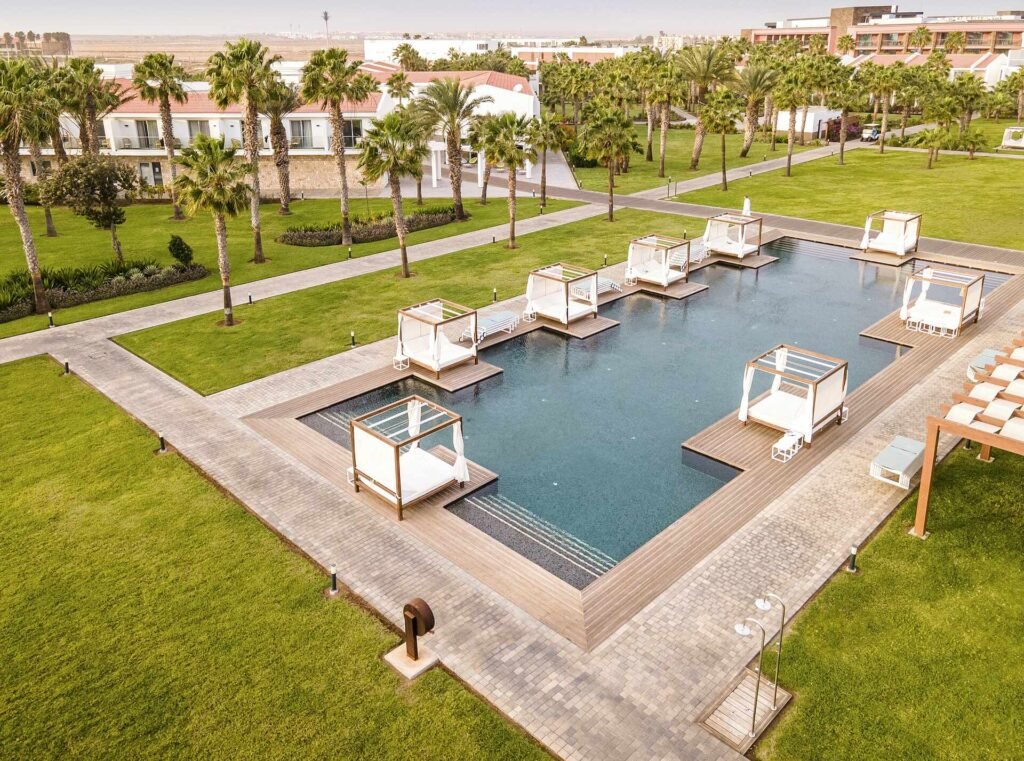
In the evening, I swapped the beach for the pool and a round of cocktails, just for the change of scenery. Sometimes that’s all a day needs.
7–8. Sal — Days 7 & 8: More Beach Days

Two more days, one mission: enjoy Santa Maria Beach exactly the way you want to. By now you’ve found your spots — the best beach bar, the best coffee, the best patch of sand. Lean into it. This is what Sal is for.

Craving a change of scenery? The island has a few more beaches worth your time:
a. Praia de Ponta Preta

About 1.5 km west of Santa Maria, Ponta Preta (“Black Point,” named for its dark volcanic rocks) feels like a different island altogether — bigger swells, rawer scenery, none of the beach-bar buzz. It’s a regular stop on the international windsurfing circuit and, come sunset, the best seat on the island.
📸 The best sunset viewpoint on the island. Be here in the last hour of daylight.
b. Kite Beach


Sal is one of the best places in the world to learn kitesurfing, and this is where it all happens. The trade winds blow reliably enough that the sky is full of kites almost any time of day. It’s worth a visit even if you have zero intention of getting on a board. World championship events are held here too.
c. Shell Beach (Praia das Conchas)

This isn’t really a beach — it’s a shoreline made entirely of tiny broken shells instead of sand. Every step lets out a soft crunch, and somehow that’s oddly soothing. Undeveloped, near-deserted, and like nowhere else on Sal.
9. Sal — Day 9: Turtle Night Tour

Another lazy day by the pool, dinner, and then — something completely new and exciting.
One of the most genuinely moving wildlife experiences you can have anywhere. Between July and October, loggerhead turtles (Caretta caretta) come ashore on Sal’s beaches after dark to nest — hauling themselves up the sand, digging a pit with their back flippers, and laying around 100 eggs before making their way back to the sea. Sal is one of the most important loggerhead nesting sites in the world, second only to nearby Boa Vista in Cape Verde.
A guided night tour takes you out to the nesting beaches with a licensed local guide, who tracks down a nesting female and talks you through what’s happening — flash photography is banned outright, since it disorients the turtles, so don’t expect dramatic photos. I’ll be honest: mine wasn’t quite the quiet, one-on-one encounter I’d pictured — more on that, and how to pick an operator that keeps things small, in the full article below — but watching a turtle that’s been returning to this exact stretch of sand for decades lay her eggs a few feet away is still one of the most affecting things I’ve done while travelling.

Read the full story (with videos) in my article Sea Turtles: Where to See, Swim With & Protect Them — Updated as I Travel 🐢.
⭐ Important

Only book with a licensed operator — unlicensed guides aren’t allowed on the beach. Project Biodiversity (the NGO protecting nests on Sal) doesn’t officially endorse specific agencies, since the government reassign licenses yearly, but some agencies donate part of their profits to the organisation — you’ll find them listed as partners on their site.
Before booking, ask whether the briefing covers best practices: walking without lights at night, dark clothing, no flash photography, no drinking or smoking. Touching turtles, using light near them, or paying for photos/releases with them is illegal — report it to Project Biodiversity if you see it. These turtles are endangered, and how tourism is done here matters.
Their visitor guidelines: https://www.projectbiodiversity.org/tourism-library.
📷 Turtle Night Tour: Book in advance with GetYourGuide or Viator — tours fill up quickly during nesting season.
10. Sal — Day 10: Final Morning & Departure

Last morning, last swim, last coffee on the promenade. Then a 20-minute taxi to the airport — and that’s Sal, done.
When I was planning this trip and had to give up on visiting more than one island, I was genuinely disappointed. I pictured a long holiday with too much time on the beach — not usually my thing. But I have to admit: I loved my time there, and for once, I came home actually feeling relaxed and de-stressed. Something I badly needed, and that the Universe (thankfully) forced on me.
Turns out, doing nothing was exactly what I needed.
So if your life could use a dose of “No Stress,” Sal might just be the holiday for you.

🚐 Transfers: Pre-book your airport transfer to avoid stress on departure with Welcome Pickups. Or you can also arrange it with Viator.
Other Things to Do in Sal
If you have energy to spare or want to swap out some beach days:
- Snorkelling at Murdeira Bay — a natural reserve on the west coast with clear water and abundant marine life. Completely uncrowded.
- Quad bike or buggy tour — a popular way to explore the island’s interior and more remote beaches.
- Kitesurfing or windsurfing lessons — Sal is one of the best places in the world to learn. Several schools operate on Kite Beach.
- Salinas de Santa Maria — the smaller of the island’s two salt mines, walkable from the town centre—a quieter, more accessible alternative to Pedra de Lume for those interested in the salt history.
I hope you enjoyed this itinerary.
🗺️ Want to make planning even easier?
Download your Free Travel Planner and build your own trip in minutes.
F. More Beach Escapes
If you enjoyed Cape Verde, you might also like these beach escapes:
- Barbados – Relax on Caribbean beaches, discover colourful traditions and enjoy the laid-back island atmosphere that makes Barbados so special.
- Fuerteventura – Long sandy beaches, volcanic landscapes and year-round sunshine make Fuerteventura an ideal destination to relax and enjoy the outdoors.
- Okinawa – Japan’s tropical islands offer turquoise waters, beautiful beaches and a unique culture shaped by centuries of island history.
Looking for more ideas? Browse all my Beach & Sea destinations.
G. Ready to Book your Trip?
To help you organise your adventure, I’ve gathered the best tools I use and recommend for booking flights, hotels, local transport and more. These links support this site at no extra cost to you.
🧳 Book Your Trip Here
- 🌍 All-in-one: Book flights, hotels, trains, car rentals and airport transfers all in one place with Trip.com. Or use Kayak to compare prices across multiple categories at once.
- ✈️ Flights: Compare the best prices on flights using Kayak — my go-to. For unconventional routes and hidden deals, also check Kiwi.com.
- 🛏️ Accommodation: Find hotels and unique stays at great prices worldwide with Booking.com. Also worth comparing on Hotels.com — prices can vary for the same property.
- 🚐 Transfers: Pre-book your airport or city transfers to avoid stress on arrival with Welcome Pickups.
- 🚗 Car Rentals: Explore at your own pace — compare reliable car rental providers with Discover Cars or Auto Europe.
- 💺 Transport (Bus and Train Tickets): Compare schedules and easily book intercity travel with Omio.
- 📷 Tours & Activities: Book fun experiences, guided tours, and skip-the-line tickets in advance with GetYourGuide or Viator. Looking for free tours? Check Freetour.com.
- 🌐 Internet Connection: Stay connected abroad with Airalo eSIMs — available in over 200 countries.
- 🔐 Online Security: Protect your personal data on public Wi-Fi with NordVPN — my go-to VPN for travel.
- 🛡️ Don’t forget travel insurance — a small step that saves big headaches! I use Just Travel Cover for comprehensive protection, including coverage for pre-existing conditions. 🌍 Not based in the UK? VisitorsCoverage has you covered — easy, affordable, ready to go!
Safe travels! 🌏✈️
Additional Information

You can also check my itineraries in Itineraries. Here, you’ll find them classified in City Guides and Country Guides.
Alternatively, in the section Destinations, they are classified based on the type of trip:
- Amazing Experiences. It covers the most extensive and complete trips.
- Beach and Sea. For those who prefer quieter activities by the sea.
- City Breaks. Short trips with a single destination.
Remember to check Cook up Your Trip. There, you will find everything you need to organise your trip from start to finish.

If you need clarification, leave me a comment or fill out the contact form. I will be happy to help you. 😊